AI Agents
Solving Complex Tasks with Large Language Models and Tools
Sean Davis, MD, PhD
Thursday, October 17, 2024
Beyond Text: LLMs as Agents
- Traditional LLMs excel at text generation, but their knowledge is limited to their training data.
- Tool use allows LLMs to become active agents, interacting with the real world.
- Examples: retrieving up-to-date information, performing calculations, running code, controlling software.
When RAG is not enough
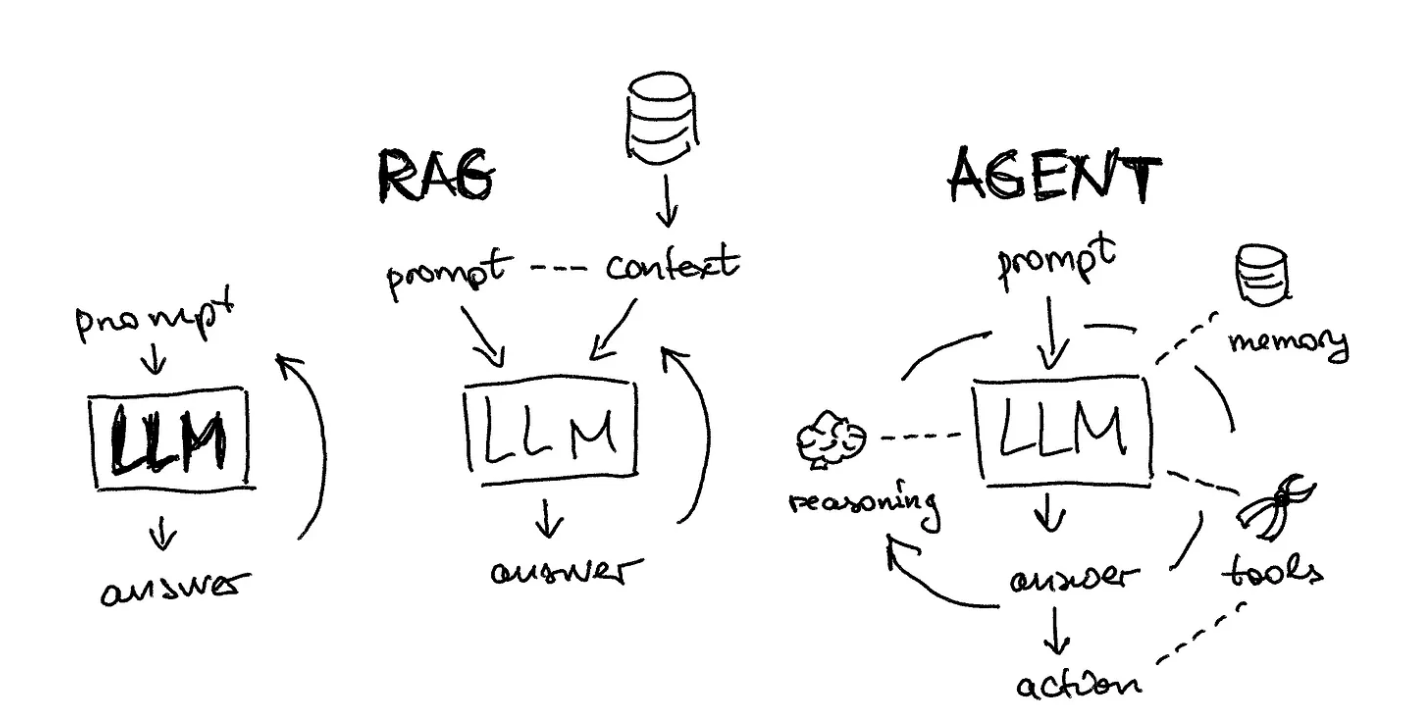
The Rationale for Tool Use
- Overcoming Knowledge Limitations: Accessing external data sources like the internet or specific databases keeps the LLM’s knowledge current and relevant.
- Enhancing Capabilities: Tools allow LLMs to perform tasks they cannot do independently, like booking a flight or controlling a smart home device.
- Improving Accuracy: Using tools for tasks like calculations or fact-checking ensures more reliable outputs.
Components of LLM Tools
- API: The interface that allows the LLM to communicate with the tool.
- Description: A clear definition of the tool’s function, inputs, and outputs. This allows the LLM to understand how to use the tool correctly.
- Invoker: A mechanism that triggers the tool based on the LLM’s instructions.
What is an API?
- API stands for Application Programming Interface.
- It’s a set of rules and specifications that allow one application to access the features or data of another application.
- This enables different applications to communicate and interact with each other.
APIs and LLM Tools
- APIs are the foundation of LLM tool use.
- They provide the communication channel between the LLM and the external tool.
- The LLM uses the API to send requests to the tool and receive responses.
How LLMs Use Tools
- Task Identification: The LLM analyzes the user’s request and determines if a tool is needed.
- Tool Selection: The LLM selects the appropriate tool based on the task and the available tools.
- API Call Formulation: The LLM generates the correct API call to the selected tool, including any necessary parameters.
- Response Integration: The LLM receives the tool’s output and integrates it into its response to the user.
GPTs/Tools
Structured Output (JSON)
- JSON stands for JavaScript Object Notation.
- It’s a lightweight data format that is easy for humans to read and write and easy for machines to parse.
- JSON is commonly used for transmitting data between web applications and servers.
JSON and LLM Tools
- Many LLM tools use JSON for input and output.
- The LLM sends requests to the tool in JSON format.
- The tool responds with results in JSON format, which the LLM can then process.
Benefits of Using JSON
- Standardized Format: Ensures consistency and compatibility between different tools.
- Easy to Parse: Allows the LLM to quickly extract the information it needs from the tool’s response.
- Flexible: Can represent a wide range of data structures.
Agents and complex tasks
LLMs as components of larger systems
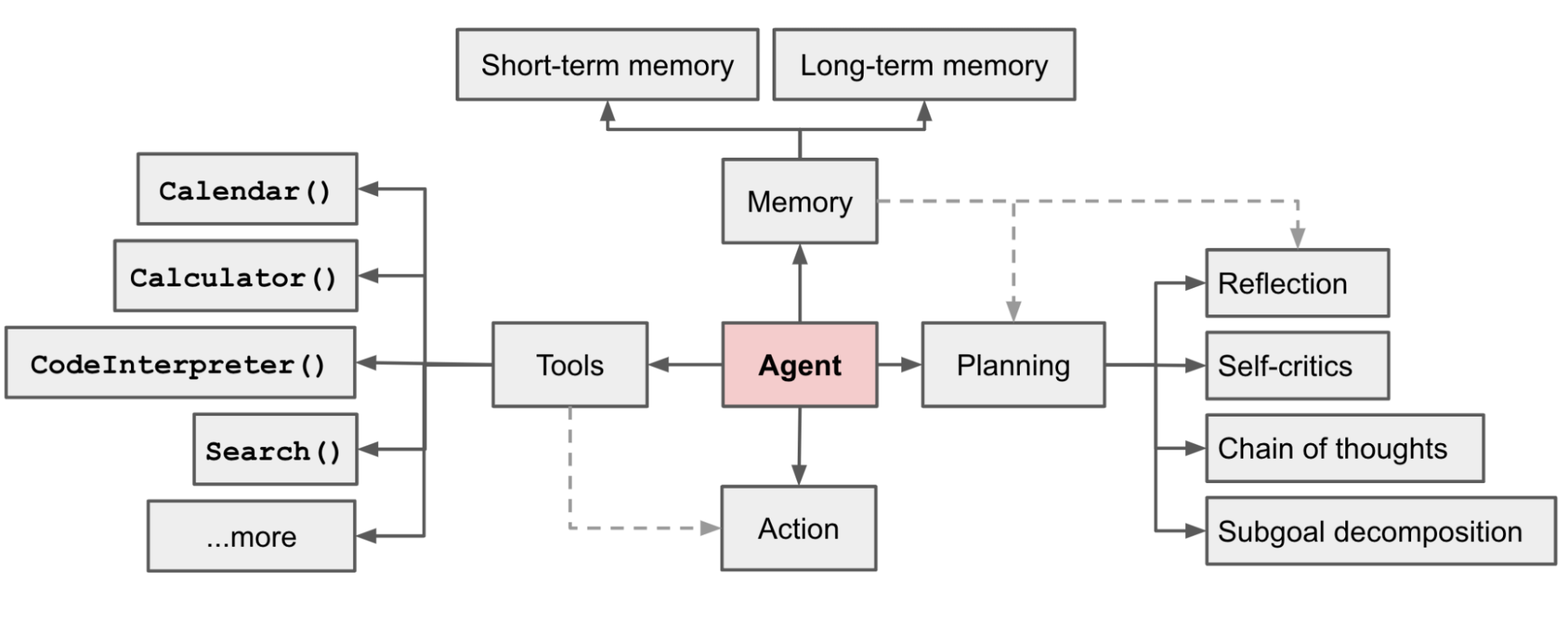
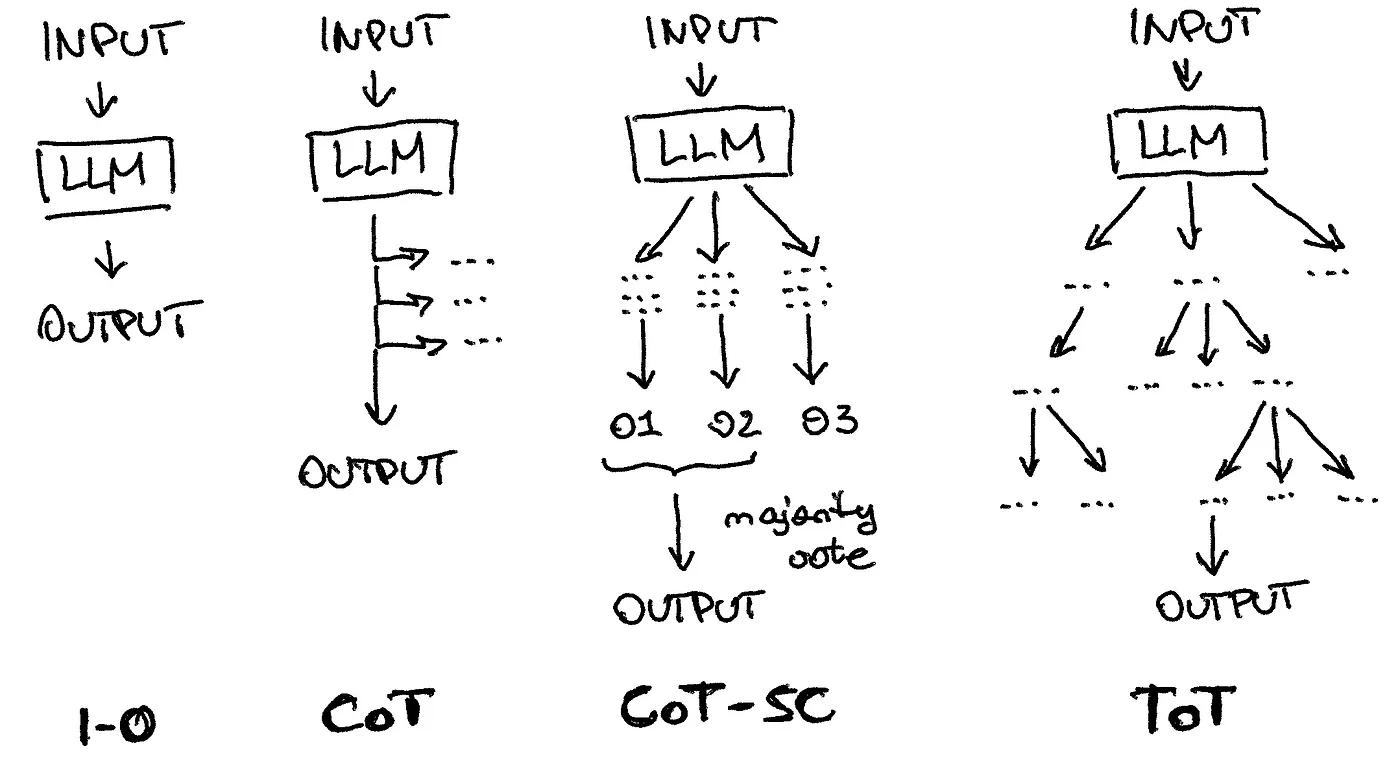
Planning
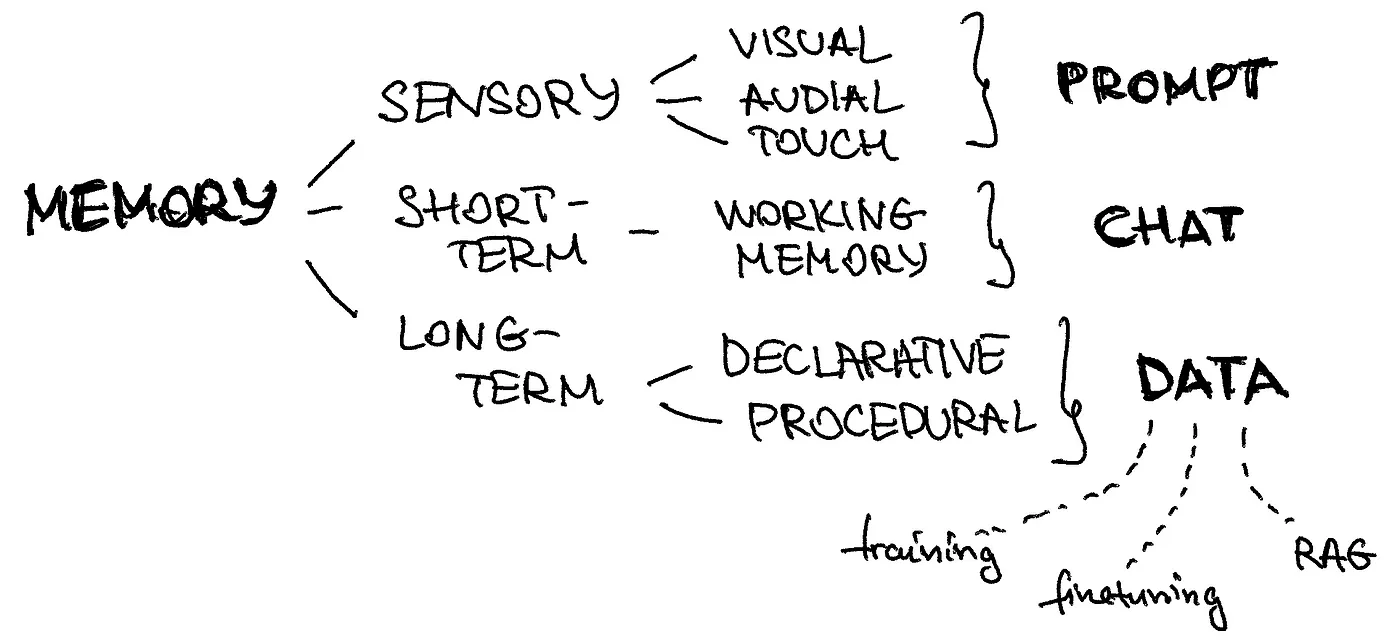
Memory
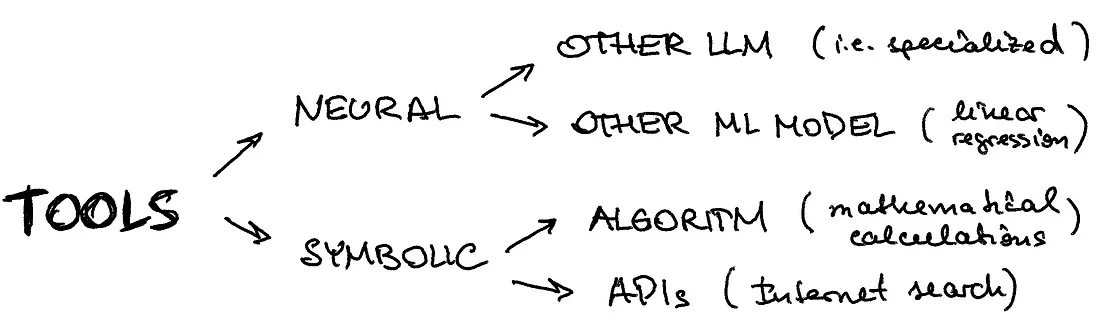
Tools
Future of LLM Tool Use
- More Sophisticated Tools: LLMs will be able to use a wider range of tools, including those that can perform more complex tasks.
- Improved Integration: LLMs will be able to seamlessly integrate tool outputs into their responses.
- Increased Autonomy: LLMs will be able to make more decisions about when and how to use tools.
LLM Tool Use in Healthcare
- Potential Applications: Accessing patient records, retrieving medical research, generating reports, scheduling appointments.
- Benefits: Improved efficiency, accuracy, and decision-making.
- Challenges: Ensuring patient privacy and data security.